

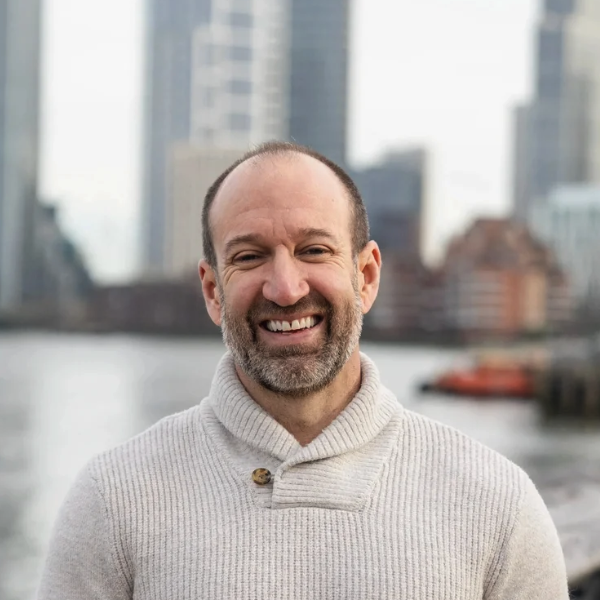
Ken Montgomery
Executive Director, d.tech
Student Spotlight: Meghna Gaddam
Meghna Gaddam – an alum of d.tech – is doing her residency program at UCLA, having graduated from the BA/MD track at Northwestern, and is conducting antibody research to understand the social determinants that affect human health. She was pre-med, a path she describes as "a lot of studying and memorization about the world, but ironically, not a lot about how one can help the world."
Already, she has used design thinking to develop programs addressing menstrual equity and community development through art, applying the same process she first learned at d.tech to problems far beyond the classroom.
.png)
"I am grateful for my background in design thinking because it has ingrained within me the ability to think outside of the traditional framework of academia and to think creatively about how I can take what I've learned to not just solve problems on a test, but more importantly, solve problems in my community."
– Meghna Gaddam
Partner Spotlight: Bellarmine College Prep
Bellarmine College Prep, a Jesuit school in San Jose, is running our Innovation Certificate Program through its Institute for Innovation and Entrepreneurship. The program provides students with frameworks for meaningful problem-solving and creativity – that can be applied to start-ups or social benefit projects, and supports them in the development of a project for social good or entrepreneurship.
Students walk away with a project that reflects areas of interest, structured story as they build your resume for college, a Credly badge, and an optional teacher recommendation letter. Past graduates have used the program to build apps, launch nonprofits, and take on real community problems.
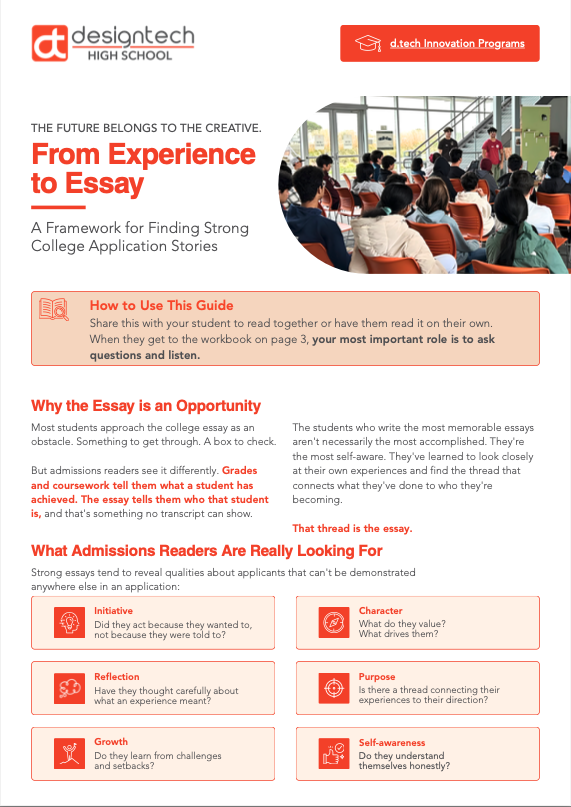
Find the One Story Only Your Student Could Tell
Every year, strong students sit down to write their college essay and freeze. The essay asks something genuinely hard: to look at your own life and find the story that matters, not just the most impressive one.
We built a free guide that walks students through that process, using a similar design thinking framework we use with our students in our Innovation Program and at d.tech: Explore, Uncover, Create, Reflect, Connect. It comes with a workbook students can use to find and shape their own story.
What We're Reading
- Let's assess like it's 1926: Ken’s Substack on the push to bring back the SAT for STEM majors, and why reaching for a century-old tool isn't the creative fix some faculty think it is.
- UC professors demand return of SAT/ACT: The EdSource piece behind that debate, on the math readiness gap driving the push.
- The biggest difference between AI and humans is that AI isn't human: Ken on the relationship between a student and a teacher, and why that connection, like a handful of others, should stay human even as AI reshapes everything else.
- A turbulent AI era and critical choices to make: Bill Gates's latest essay on which jobs and skills he thinks stay reserved for humans. Good pairing with Ken's piece above.
By the Numbers: d.tech among the top in state!
According to the San Francisco Chronicle’s list of the best public schools in California, d.tech is among the top 2% of all California public high schools, and #4 in the Bay Area for outperforming expected admissions to competitive UC campuses.
*d.tech students earn 30 more competitive-UC acceptances per 100 seniors than predicted
Connect with Us
If something in this issue resonated, we'd love to hear from you. You can follow along on LinkedIn or explore more at the Innovation Certificate blog.